
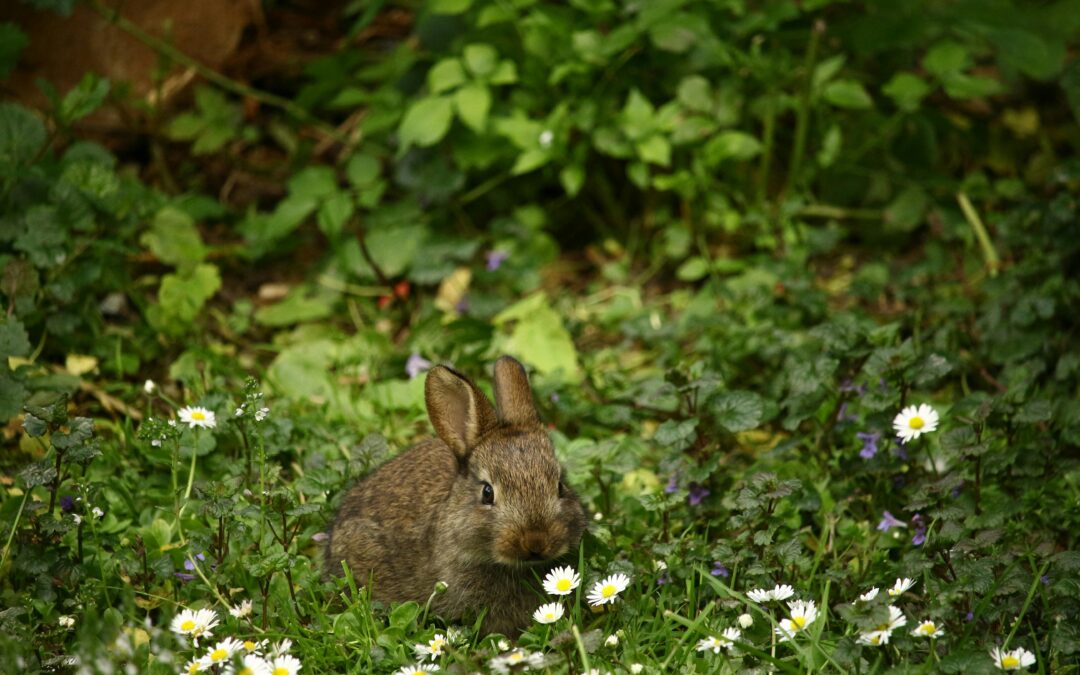
I found a Baby Mammal …. Now what?
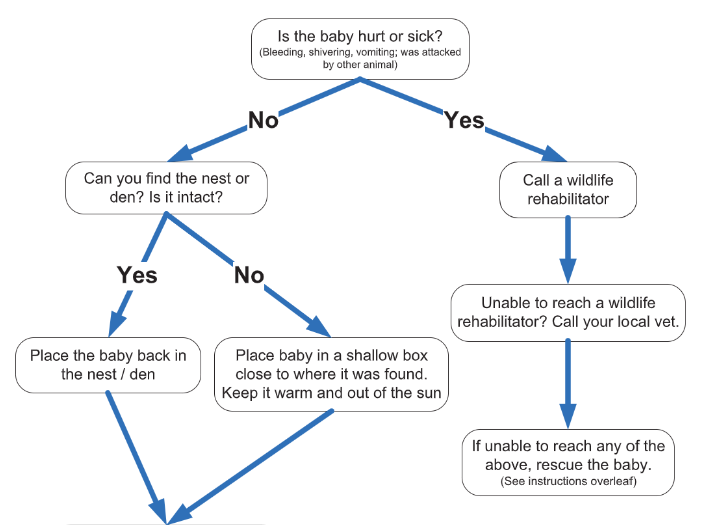
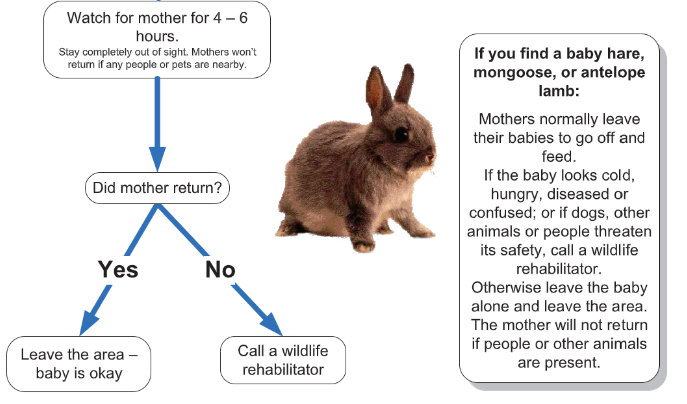
How to rescue baby animals
1. Prepare a container. Place a clean, soft cloth with no strings or loops on the bottom of a cardboard box or cat/dog carrier with a lid. If it doesn’t have air holes, make some. For smaller animals you can use a paper bag with air holes.
2. Protect yourself. Wear gloves if possible. Wild animals will likely bite, scratch, slap and claw to protect themselves, even when sick. They also commonly have parasites (fleas, ticks and lice) and may carry diseases.
3. Cover the animal with a light sheet or towel.
4. Gently pick up the animal and put it in the prepared container.
5. Warm the animal if it is cold or if the animal is chilled. Put one end only of the container on a heating pad set to low. Alternatively, fill a zip-loc plastic bag, suitable plastic cold drink container, or even a rubber glove with hot water. Wrap the container in a cloth and put it next to the animal. Make sure the container does not leak, or the animal will get wet and chilled.
6. Tape the box shut or roll the top of the paper bag shut.
7. Note exactly where you found the animal. This will be very important for release.
8. Keep the animal in a warm, dark, quiet place.
– Do not give it food or water.
– Leave it alone. Do not handle or bother itt in any way.
– Keep children and pets away.
9. Contact a wildlife rehabilitator, conservation department or vet as soon as possible.
– Do not keep the animal at home any longer than is necessary.
– Keep the animal in the container and do not let it loose in the house or the car.
10. Wash your hands after contact with the animal.
– Wash anything the animal has come in contact with – towel, jacket, blanket, pet carrier etc to prevent the possible spread of diseases and or parasites to you or your pets.
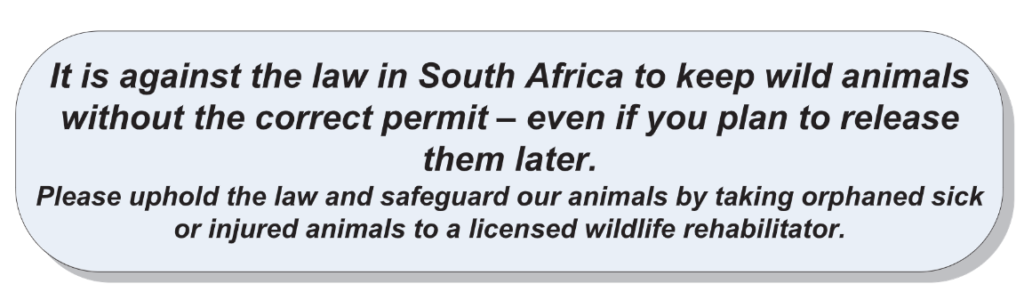
11. Get the animal to a wildlife rehabilitator as soon as possible.
Copyright Dullstroom Bird of Prey Rehabilitation Centre.